
AthensBorn Birth Services
  • HOME
    • ABOUT >
      • MEET OUR TEAM
      • KIND WORDS
      • FAQ
    • DOULA APPRENTICESHIPS
  • SERVICES
    • BIRTH DOULA PACKAGES >
      • LABOR DOULA PACKAGE
      • APPRENTICE LABOR DOULA PACKAGE
      • LAST MINUTE DOULA SERVICES
    • CHILDBIRTH EDUCATION
    • LACTATION SUPPORT >
      • Book a Lactation Appointment
      • Lactation Consultations
      • Lactation Classes
      • Lactation & Insurance
      • Milk Bank Donation
      • Lactation Resources for Professionals
    • POSTPARTUM DOULA SUPPORT
    • PLACENTA ENCAPSULATION
    • PRENATAL SUPPORT PACKAGES >
      • CESAREAN BIRTH PLANNING PACKAGE
      • PRENATAL DOULA SUPPORT PACKAGE
    • GIFT CERTIFICATES
  • CLIENTS
    • Online Forms
    • Local Resources
    • FAQs
    • Community Connections
    • Insurance Reimbursement
  • CONTACT
  • EVENTS AND HAPPENINGS
  • AthensBorn Shop
    • Shop Birth Doula Services
    • Shop Lactation Services
    • Shop Childbirth Education Classes
    • Shop Postpartum Services
    • Shop Prenatal Support Services
    • Shop Placenta Services

Ramblings & Musings

Postpartum Exercise and Self-Care

12/9/2016

0 Comments

 
 ​​Dear Readers,

We have an exciting surprise this week... a guest blogger, Athens' own Hannah Gay of Baby Boot Camp! We know many of you already love Hannah and Baby Boot Camp, but here's a short intro to clue the rest of you in: Baby Boot Camp is an innovative stroller fitness program that helps moms regain or enhance pre-pregnancy fitness levels and meet the physical challenges of parenting by emphasizing strength training in a supportive environment. Hannah has been serving Athens families for years, and we're so thankful that she was willing to contribute her knowledge and expertise to us. Please check out her contact info (below) and get in touch with her if you'd like any further iformation about her programs. We hope you enjoy the information she has to offer postpartum mamas as they safely get back into the swing of exercise!

Picture
By Hannah Gay:  


​Just because you can doesn't mean that you should.
This is my mantra for prenatal and postpartum fitness thanks to Kristen Horler, Founder and CEO of Baby Boot Camp. Over the past few years we’ve been seeing trends of women lifting heavy barbells over their head at 8 months pregnant and running marathons at 8 weeks postpartum. Don’t get me wrong- I think these women are amazing. They have unbelievable strength, endurance and dedication. They’re breaking away from the norm and demonstrating just how incredible a woman’s body is. But every time I see these photos I wince a little knowing that their pelvic floor is being negatively impacted. Not to mention that these “super moms” are setting the bar slightly out of reach for the rest of us who are doing good just to be waddling through Target. So today I’m going to share with you how to exercise safely and when to know to modify your routine.


    An obstetrician’s typical recommendation for prenatal exercise is to keep up with your current routine. This is great but for most of us it becomes unrealistic at some point in our pregnancy and we can get frustrated or discouraged. So when should you start modifying your exercise program? Any pain at all is a red flag. Your body is facing some major changes… You’re growing a human! Your hips can widen, your rib cage will expand. The hormone Relaxin begins running through your body which can cause us to overstretch/ pull muscles. It’s also the contribotor to your growing feet. Awesome, right!? All that to say; if you’re a runner or a lifter and your feet or hips start to hurt then it’s time to back off. We’ve started to dangerously classify pain is normal but it’s not. It’s common, not normal.

    Another red flag: leakage. *gasp*. Most of us have been there. You’re doing something as part of your daily routine and a little pee comes out (insert embarrassed face emoji). This is a sign of the stress that your pelvic floor is under. So again, common but not normal. The bottom line is if you're experiencing pain or leakage during your typical workout then it’s time to listen to your body and give yourself a break. It’s ok to take a nice walk instead of running. Shorten your range of motion during strength exercises. Chose the light weights or just use your body weight. And please don’t ever compromise your form during an exercise. You don’t have to prove yourself to anyone! And if you’re experiencing leaking from coughing or sneezing you might want to try a pregnancy support belt just to lighten the pressure on your pelvic floor.

    Let’s fast forward to postpartum exercise. I don’t let new moms attend my classes until they are 6 weeks post vaginal delivery and 8 weeks post cesarean. No exceptions. Here’s where the mantra comes in. Let’s all say it: just because you can doesn't mean that you should. You might feel like you’re back to semi-normal around 4 weeks or so. This is where it’s important to enjoy those walks with your new baby. Internally your organs are still finding their place, your pelvic floor is still very weak, and you may have an abdominal separation known as Diastasis Recti. But once you reach that 6/8 week mark it doesn’t mean it’s time to go full beast mode. You’re going to start back slowly with walking and low impact movement. Think: no jumping, light weights, knee push-ups and planks.

    I have another magic number for you and that is to follow Baby Boot Camp’s 16 Week Rule. Yes, you read that right. 16 weeks, a.k.a. 4 months!! Once you reach 4 months postpartum you can finally begin running by following a few guidelines. Start with running/walking intervals and keep your runs to short distances. Any leakage? If yes then listen to your body and go back to walking. Can you jump from a curb with two feet, landing on two feet? Any pain in your pelvis or trunk? Any leakage? If yes then you’ve got some work to do before getting into high impact movements.

    So here’s what I suggest if you’ve reached 16 weeks postpartum and you’re still experiencing some abnormalities. Make an appointment with your OBGYN to discuss your concerns. Try getting in with the ARMC pelvic floor physical therapists. Sign up for the Core9 Diastasis Repair workshop at Thrive Integrative Medicine. Please just don’t ignore it. Pelvic floor pain and leakage are common but they’re not normal and my hope is that every mother can will be able to exercise at their desired level without feeling worried or embarrassed. Also, remember that taking care of yourself postpartum is just as important as taking care of your baby. Make a self-care plan, discuss it with your partner and find some time to do what you love!

Hannah Gay is the owner and lead instructor at Baby Boot Camp Athens, the area’s first stroller fitness program. She has a group fitness certification through the Aerobics and Fitness Association of America (AFAA). She has perinatal fitness training through Baby Boot Camp and is a licensed Core9 Birth Recovery and Diastasis Repair provider. She has two sons, Henry (3 yrs.) and Cullen (16 mos.). She enjoys a good Netflix binge session with some wine and dark chocolate!

Ways to contact Hannah:
706-614-1814 (text or call)
[email protected]
facebook.com/babybootcampathens
https://www.babybootcamp.com
Instagram: babybootcampath

0 Comments

The unBossy Doulas

11/16/2016

2 Comments

 
Picture
Hi, loyal readers! Here’s a topic that all three of you can get on board with - we will NOT tell you what to do in pregnancy or in birth. Of all the things Kate and I are (Funny? Smart? Maybe. A little weird, definitely), we’re certainly not bossy (though our spouses and kids may beg to differ. Good thing they don’t read our blog!) Particularly to our clients.
No one likes being bossed around, especially in a vulnerable situation such as pregnancy and birth. So I wanted to tell you a little about the AthensBorn ‘birth philosophy’ … get ready, this is big.
We will NOT boss you around. We will NOT tell you what to do. We don’t make decisions for our clients, we don’t tell them what’s best for them, we don’t even give out our personal opinions if we can avoid it. We want each client to own their decisions, from which pediatrician to choose to where they give birth to what they wear while in labor. We offer helpful tips, we share our experience and what we’ve learned, and we try to stay on top of evidence-based information so we can share that too. But, we will not decide what each client should do!
“Why???” you ask. WHY?
Because it’s not OUR birth! It’s not our baby, it’s not our body, and we don’t get to make the decisions that affect those things. We support parents in the way they need, in the way that’s right for them. We don’t draw a lot of lines in the sand, because it’s not our job to police your choices.
Another thing I want to point out - other doulas may practice differently, and it’s not our job to police them, either! There’s a doula out there for every couple who wants one, and each couple deserves to find one who fits in with their own philosophy and needs. We just wanted you to know how we practice.
And, you know what? You don’t even have to believe me just because I wrote this. You’re welcome to contact us and see what we’re all about. Or not. It’s your choice <3

Love,
Becca

2 Comments

Howdy, Partner.

11/5/2016

0 Comments

 
Our words matter. They communicate our needs, express our feelings, and set expectations for things to come. As doulas, we often find ourselves choosing words carefully because of the power they hold in emotional situations. There’s one certain word that we often hear in birth communities that has always rubbed me the wrong way. I’ve never really cared for the word “coach” when talking about a partner’s role during labor and birth. I’m not sure how the term came about, but I suspect it was an attempt to give fathers a “gender-appropriate” role as society allowed them to start coming into the delivery room to witness the births of their children. What can I say? The history of childbirth is fraught with both strange and sexist ideas. Regardless of its origins, Becca and I don’t find ourselves using it when talking to clients.

The term “coach” is most often used to describe a person who has experience and expertise in a certain area and uses their skills to improve another person’s technique. Does this sound like a fair and reasonable label for a newly expecting parent? I think not.

There certainly are times when a significant other has seen labor before and may have even given birth, themselves...but, even these individuals are unlikely to claim expertise. And, what about those who have zero experience? “Hey, I know you’ve never been to a game before, but it’s time to get in there and tell her how to do this thing right!” Yikes. Talk about pressure to perform. Words are important, so let’s choose a word that doesn’t totally freak people out by asking them to coach a high-stakes game in a sport they’ve never played before.

At AthensBorn, we prefer to use the term “partner”...and not just because we’re in the south and it sounds great with the accent. (It does.) But, because two people moving through a labor and birth are, in fact, partners. And, there is no one right way to be a partner. Some partners want to be right in the midst of labor, holding their loved one up, massaging her back, reminding her to breathe. Some partners are a little nervous...they are present and loving but also need support, guidance, and reassurance themselves from time to time. Some partners are deeply anxious and fearful in these types of situations and are not able to provide hands-on, physical support during labor but they still want to be present for that miracle moment of their child entering the world. A doula can help facilitate any one of these situations...and they’ll do it judgment-free.

Whatever kind of partner you see yourself being, your thoughts, hopes, and wishes for the birth matter. As doulas, we want to get to know you during the pregnancy, too. We want to know what you’re looking forward to, what you’re worried about, and understand how we can best support you. You don’t need an in-depth understanding of the intricacies of birth to be a great partner (hey, that’s why you hired a doula, right?). You don’t need coaching skills, you simply need love and compassion. No one knows your partner better than you and that's irreplaceable during labor. We’ve been to many births with many devoted partners who each found a way to support their loved ones during birth.

Trust us...you’ll find your own best way, too.

Take care,
Kate
0 Comments

Counter Pressure: Why does it rock so hard?

10/11/2016

1 Comment

 
People who have given birth: If you’ve experienced contractions, you may have been one of the blessed ones who also received this magical thing we call counter pressure. That basically means that you have someone in your life who loves you enough to push on your lower back during each contraction. You may not remember (or care) who was doing it or exactly how, but you know it was one of the things that helped you survive that moment and conquer each contraction as it came.

The rest of this blog post is for everyone else: partners, doulas, friends, anyone who might be assisting someone as they give birth. If you have provided counter pressure to a laboring person, you are a saint. You will forever be remembered as part of their labor survival kit and they will refuse to do labor in the future without it.

There are a few things to note about it, though, especially for anyone who has never used counter pressure as a tool. So let’s go over some basics:

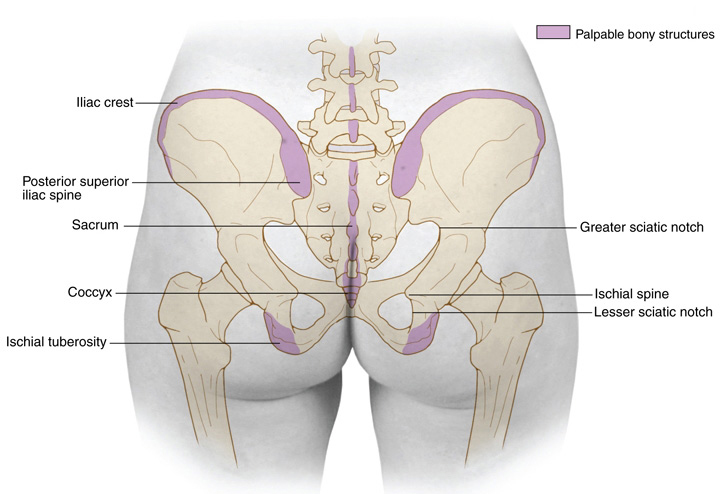
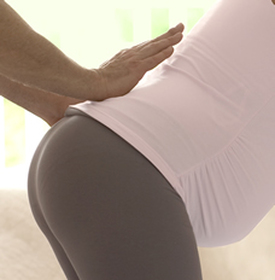
​How does it work? See this picture below? Look in the middle of that person’s back - that’s their sacrum. Sometimes laboring women feel pain in that place as their baby’s head passes by it on the way down - and yes, it’s generally more uncomfortable when the baby’s head is in the posterior position, meaning the bony back of the baby’s head is pushing against the sacrum. However, even anterior-positioned babies can cause discomfort - so counter pressure helps by pressing back against the baby’s head and lessening the sensation of pain. It doesn’t necessarily fix the problem, but it can be a great coping strategy for the laboring woman in that moment. If it works, do it!
AthensBorn Birth Services - Counter Pressure Anatomy

Communicate. You have to communicate with the owner of the back you’re providing counter pressure to. If you don’t know exactly how to do that, here’s a little labor role play you can practice:

Partner: Can I try some counter pressure on your lower back during the next contraction?
Pregnant person: Uuuuuuggggghhhhhh. [Assume that’s a yes.]
<Attempt counter pressure throughout entire contraction.>

Partner: How did that feel?
Pregnant person: OMG, do that forever.

If they LOVED it, do it again! If they hated it or want you to try again, but in a different spot, try again but in a different spot. If they hated it and never want you to touch their lower back again, that’s ok! Try not to let your feelings get hurt. She’s not trying to make you feel bad, she’s just in an intense place in her life. Laboring women don’t always know what they want, so it’s important for her birth team to be flexible and not take thing personally.

Keep communicating. Sometimes as the baby’s head moves down, the perfect spot for counter pressure moves down, so keep communicating with your laboring person! What works in early labor might not work later, and that’s ok. Counter pressure might work against the lower part of the person’s spine, or further down towards their tailbone - you just have to try it and find out.
The Method. As this person in the picture is doing, use the palm of your hand - it provides an even, steady pressure. You can even use both hands, one on top of the other, to provide MORE pressure and to lessen the physical impact to your arms. Aim for the center of her back, right on her sacrum.

Some laboring women like the pressure to be steady and unmoving. Some women find that they like to feel some movement, so you can try a firm circular or stroking pattern and see what she likes better. (Remember to communicate!)

Positions, anyone? The laboring woman can be in lots of different positions to receive counter pressure: on her hands and knees on the floor or bed or couch, sitting on a birth ball, laying on the birth ball, sitting on the toilet, leaning over a kitchen counter, laying on her side, standing up, in the tub, in the shower. Anywhere she is comfortable where you have access to her back is a good place.

Test drive during pregnancy. There’s no need to wait until the contractions get intense before you try counter pressure. It can provide relief throughout pregnancy, especially in the third trimester, and give pregnant women and their partners something to do while they wait for the big day. This kind of labor preparation also provides couples a sense of partnership and togetherness, which is always a positive thing as parenthood approaches.

So, what do you think? If you’ve had a baby, did you enjoy counter pressure? What made it work or not work for you? If you’ve assisted as someone had a baby, do you have any tips to give to other birth partners? Feel free to share your experience with us! We love your stories!

Take care,
Becca
1 Comment

Slow things down with Cord Burning

8/30/2016

0 Comments

 
You’ve probably heard of delayed cord clamping, but what about cord burning? This is a beautiful, ancient process that’s not very well-known, but is a lovely way to savor the early moments of your child’s life.
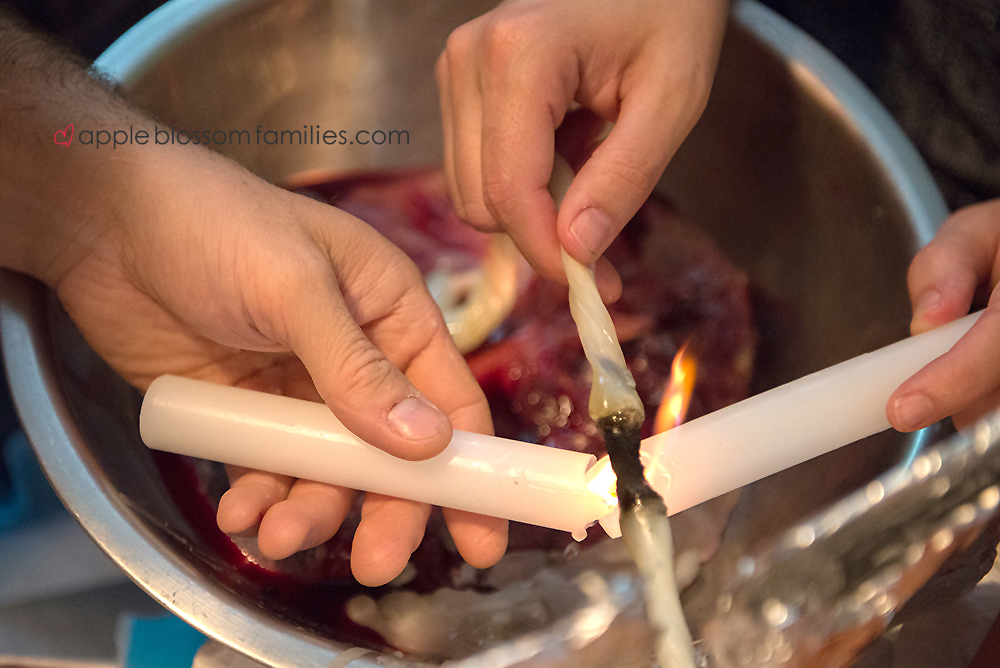
AthensBorn Birth Services - Cord Burning by AppleBlossomFamilies
​


Cord burning is the process of using heat (fire from a candle, usually) to sever the baby’s umbilical cord after birth, rather than the typical cutting. Basically, after the placenta has been delivered, the baby is snuggled skin-to-skin on mother’s chest with cord intact and still attached to the placenta. Then, a “burn box” (check out the beautiful ones here) or homemade “shield” made of aluminum foil-covered cardboard is placed around the cord with the aluminum foil facing the placenta. The cord is held over a candle flame and rotated for 10-15 minutes until it burns through and separates. After the end of the cord has cooled, the half of the cord that’s attached to the baby will be curled into a spiral or tied into a knot on the baby’s stomach and wrapped with gauze until the next day. When the gauze is removed, the cord spiral or knot will air-dry and is likely to fall off just a few days later.

You may be asking what the benefits of cord burning are. After all, it requires some extra help, takes a lot longer than clamping and cutting, and adds a bit of additional work to the intense work already involved in birthing a baby. Allow me to pontificate…

If you’ve had a baby, think back to the first hour after your baby was born. It’s often called the “Golden Hour” - in which the new family is (supposedly) peaceful, calm, and falling in love with their newborn. However, it often seems like it’s all business - the business of clamping and cutting the cord, expelling the placenta, and basically rushing the separation of the baby from all it’s ever known into this new, cold, bright, loud world. I like to think of cord burning as a refreshing way to slow it all down. It’s a very intentional way to allow families to savor the connection of the baby to the mother’s body, rather than blindly running forward into this newness.

Also, consider your ‘village.” Cord burning can be a way for the partner, doula, midwife, and even the baby’s older siblings to be involved in the baby’s birth. What a beautiful way for a baby to be introduced to their community!

Medically speaking, cord burning can be a great way to separate the cord when there aren’t sterile medical supplies available - clamps and scissors. There are also known physical benefits to delayed cord clamping, which necessarily precedes cord burning.
​
Cord burning may not be for everyone. In fact, the way it stands, in Athens it’s just an option for homebirth babies since the hospitals don’t allow an open flame in the birth rooms (and for good reason!). But now you know there’s another option for you to consider as you plan out your ideal “Golden Hour.”

Love,
​Becca
0 Comments

Birth, Teamwork, and Destiny

8/12/2016

0 Comments

 
Women supporting birthing woman
"Although birth is only one day in the life of a woman, it has an imprint on her for the rest of her life."
Justine Caines

Hello, friends!

Kate and I had an interesting conversation a few weeks ago about getting the perfect clients for us… and we truly have. From the clients who hired our team in the first place, down to which of us actually attended their birth, we both feel that we’ve been at the right births.

This blog post is a little about how our team works, on a more philosophical level rather than the logistics of it. Yes, we spend a LOT of time figuring out our logistics (“Can you take call next week so I can go out of town with my family?” and “Sure, I can email them back today!” and “What do you think about [insert any of the myriad aspects of running a small business here]?”) … but our partnership is bigger than that. 

We GET each other. From our philosophy about birth (your body, your birth, your choices) to our sense of humor, we’re totally on the same page. This is actually one of the reasons we think people are willing to hire us as a team - we’re eerily similar. We can't count the number of times we've sent each other the exact same message at the exact same time ("cyber-cross!" as Kate calls it). It's freaky.

However, even with all of our similarities, we are also both quite certain we’ve attended the births we were supposed to attend. Whether it was decided by the call schedule or if we were able to choose which of us went to which birth, we’ve both felt a clear sense of rightness as we’ve walked into each client’s birth space. That makes us feel really confident in our approach to this sacred work, and seems to be a good option for the women and families we’ve served, too. 

Now, whatever your thoughts are about how things happen in the world - whether it’s fate, a higher power, or complete coincidence - it’s working. And we love it <3

Take care!
Becca


0 Comments

Give the gift of a doula...

8/9/2016

0 Comments

 
Dear Friends and Family Members of Pregnant People,

Hello, and welcome to the AthensBorn blog! This post is for you, by virtue of whoever it is you know who is currently expecting a child. Did you know that it’s possible to gift someone a doula? Yes, it’s true! You can purchase our services as a gift!

“….but why, Becca, why would I do that??? And how, and what services? Tell me more!” you say? Well, let me tell you!​
​
First, let’s start with which services you can gift: ALL THE SERVICES!
Gift ALL THE SERVICES!
From prenatal services to birth to placenta and postpartum services, we do it all, and it can all be given as a gift to a pregnant woman. 

Why gift a birth doula….
Because people benefit from having doulas by their side in labor. A woman with a doula feels supported and informed, which helps her have a more satisfying birth experience… regardless of the outcome of her birth. 

Why gift placenta services…
Because placenta encapsulation is a great way to help a woman ease her transition from birth to having a newborn. Taking placenta pills can help ease her fatigue, hormonal imbalances, and give her back some of the nutrients she lost during birth.

Why gift a postpartum doula or lactation care...
Because we don’t have the village around us - parents, grandparents, aunts, uncles, cousins - that generations past had to help care for a newborn and a mama recovering from birth. It’s less common in our society for a family to be surrounded by available, helping hands than it ever has been, but there’s more pressure to strive for “perfection” than ever, and that’s hard on a postpartum mama. A postpartum doula can help bring some of that back into the early postpartum days.

Visit our website​ for more information about how to make a gift of our services (electronic or on paper) for someone you know. 

Whether you want to contribute a small amount toward a family’s services or purchase the whole shebang; whether it’s a surprise or something you’ve discussed with the parents, please consider this as an alternative to the traditional gifts. A family never forgets their pregnancy, birth, and early postpartum days - help them to cherish these moments by gifting them doula services to help them navigate resources, information, and options. We can answer any questions you have and even set up a consultation with you and/or the parents before you make your final choice. 

Happy Gifting!
Becca
0 Comments

The Magical Placenta

8/2/2016

1 Comment

 
Placenta Pills
Hi friends!

At Athensborn, we’re currently offering a new service:

Placenta Encapsulation. AKA, “after my baby’s birth, I’m going to eat my placenta.”

Now, before you react like my dad did when I explained to him exactly what that meant (“But that’s cannibalism!”) please hear me out.

The placenta is an organ that is created during your pregnancy, and grows alongside your little one until birth. It attaches to the wall of the uterus and is responsible for providing baby all of his/her nutrients and oxygen. Placentas are thought to be full of hormones and nutrients that can contribute to postpartum healing, mood stabilization, healthy milk supply, and energy levels. Now, full disclosure: the bulk of the current evidence pointing to these benefits is anecdotal, meaning women who took placenta pills commonly report these things. There simply haven't been enough peer-reviewed studies done on these specific benefits, which means that there is not yet scientific backing for it. We encourage each of our clients to talk to their healthcare provider, talk to anyone they know who has experienced this, and read the research that is out there and decide for themselves if this is right for them.

There’s more great information about the placenta here, and you can also learn about the placenta services we offer. But before you do that, I’d like to share some of my personal thoughts about placentophagy (ingestion of the placenta).

The first thing I’d like to share is that I’ve never eaten my own placenta. I have no first-hand evidence of any of this, I can’t tell you what it tastes like, I can’t tell you how it made me feel. But I feel like that’s really not important, because my body is different from yours. My births were different than yours, and my postpartum experience was different than yours - every woman experiences each of these monumental life events in a unique way, and owns her own experience. No one can tell you with certainty how taking placenta pills is going to make you feel, nor should they.

The second thing I want to share is that before I began my research into placenta encapsulation and took my training course through IPPA (International Placenta and Postpartum Association) I was not interested in eating my placenta. It didn’t weird me out if someone else wanted to eat theirs, but I didn’t feel like I needed to eat mine. And that’s totally cool. No one should tell you that you have to eat your placenta. Again, this is an experience that each woman has to own and decide for herself.

My third and final thought to share is that if I have another baby, I’m absolutely going to encapsulate my placenta. I’m going to see if it keeps me from feeling like I’m losing my mind in my early postpartum days, because I know what that feels like and I’m willing to do almost anything to avoid it. I’m going to make myself a placenta tincture to see if it will do anything to alleviate the menstrual-related migraines I’ve gotten nearly every month for decades. I’m going to carry that tincture with me into menopause and see how it treats me as I enter that vulnerable and powerful time of my life.

Y’all, I don’t see myself as a hippie. I really don’t (please ignore the fact that I cloth diapered my babies and make my own soap and deodorant. Those were totally financial decisions. Oh, and I recycle anything with a triangle on it. And, I compost and plant a garden every spring. You know what, I’m ruining my “I’m not a hippie!” case, nevermind.) The point is, I’ve read the research. I’ve looked into it, I’ve explored the possibilities, I’ve learned about the process, and I’m on board with it.

Please, please know that I would never presume to tell anyone else what to do. Just as with all of our labor and postpartum clients, I will tell anyone interested in our placenta services what their options and choices are, and leave it up to them to decide. That’s how we operate here at AthensBorn. And I wouldn’t have it any other way!

Lots of love and a little bit of placenta dust,
Becca
1 Comment

Can I afford a postpartum doula?

7/20/2016

0 Comments

 
AthensBorn Birth Services: The First 40 Years
Hiring a postpartum doula is something that’s sometimes looked at as a luxury. But, ask most parents a little farther down the road and they’ll tell you about the things they wished for most in those earliest newborn days. Support and sleep. Two things that an experienced postpartum doula can offer!

How can I make it happen?

At AthensBorn, most of our clients hire a postpartum doula in one of two ways.

#1- When friends and family members ask what gifts or what kinds of help would be welcomed, these parents express how grateful they would be to receive a contribution to postpartum doula care. If you were to put a postpartum doula package right there on the gift registry for a baby shower, chances are it would not be the most expensive thing on the list and people generally love to contribute to these kinds of services! Becca and I have gone a step further to make this as easy as possible by offering the option to gift services through our website. Friends and family members can choose the services they’d like to gift in whatever amount they prefer and pay directly online. Done! We also provide the option to have a pretty, paper gift certificate mailed for those who wish to have something more personal in hand to give. Everyone likes a little glitter and ribbon from time to time, right? So, having the name and website for a postpartum doula you’d like to work with at the ready when people ask is a great way to start.

#2- Prioritize. Many of our clients simply make postpartum doula care a priority and set aside a small amount of money every month toward their services. It’s important to them to feel supported and cared for in those early days, so they plan ahead and make adjustments where needed. It’s usually not as hard as it might seem. If a family sets aside $15 every month of their pregnancy, they’ll have enough for a helpful postpartum package. Many businesses (including AthensBorn) also offer payment plans.

If you’re not sure if a postpartum doula is the right option for you, ask around among friends and parents in your community. Talk to someone who hired a postpartum doula and find out about their experience. And, as always, we’re happy to answer any questions you have!

Take care,
Kate
0 Comments

Breastfeeding...do I really need a class?

7/9/2016

0 Comments

 
AthensBorn - Breastfeeding Mom and Baby
A common question we hear from soon-to-be parents…

“Breastfeeding is natural, so why do I need to take a class?”

Natural? Yes.
Easy? No.

Breastfeeding your baby is one of the most natural things in the world of parenting. It is also a learned skill. When we tell parents that breastfeeding is natural and then offer no further information, we may unintentionally be setting them up with unrealistic expectations. Part of the problem comes from how we use the word “natural” in our language these days. One definition associates the word with something that comes easily or occurs with very little effort.

“She’s a natural.”
“It just came so naturally to him.”

These are things we often say to convey how effortless and enjoyable an experience was. But, breastfeeding is something that is learned with practice. It is definitely natural in that it’s how nature intended us to biologically feed our babies. But, it takes time for both mama and baby to learn how to do it, and it takes a partner time to learn how to best support it.  

“My grandmothers never needed to take a breastfeeding class. So, I should be ok without one.”

Oh, so true. And, how we all long for those days of breastfeeding yore. But, here’s the thing. Our grandmothers grew up watching the women in their families and neighborhoods breastfeed. At home, at family potlucks, in each other’s living rooms, babies breastfeeding everywhere. And, just like so many of the things we learn by observing, we pick up helpful information about breastfeeding in the very same way.

As a generation, we have lost this very valuable education. Think of the things we would have learned from watching our mothers, grandmothers, aunts, sisters, and friends breastfeed their babies…things like the fact that breastfeeding in the early days is done with a ton of pillows and often an extra set of hands (or two). That it’s normal to feel ravenously hungry or suddenly have the thirst of someone who’s crawled through the blazing Sahara when you sit down to nurse your baby. Or that breastfeeding a newborn baby takes an average of 6-7 hours out of every day. That’s a shocker to many parents right there! But, do the math and you’ll see it’s true. The different ways to hold a baby, coax a baby, latch a baby onto the breast...all things we can absorb into our understanding of breastfeeding when given the opportunity to watch and learn from others. But, the main thing that we learn from growing up immersed in a breastfeeding culture is this...we CAN breastfeed. We come from a long line of women who figured it out and therefore we will, too.

Our generation has to learn a little differently, but we are just as capable as our ancestors. While some of us are lucky to have relatives and friends who have nursed their babies and can offer helpful tips and advice, most of us can greatly benefit from an excellent breastfeeding class with a skilled teacher. Having an idea of what breastfeeding may look like can give parents much more confidence when the time arrives. Parents who know what to expect will be less worried that about milk supply, less worried about whether their baby’s eating habits are “normal,” less worried about whether or not it’s taking too long...just less worried, in general. And, who wouldn’t rather be less worried? These parents will also have some tricks to try when they encounter bumps in the road and they’ll know when it’s time to reach out for help.

So embrace the idea of a breastfeeding class! You’ll walk out feeling better prepared and more excited for your journey. And, your helpful and friendly doula should be able to point you in the direction of some great options in your area.

Take care,
Kate
0 Comments
<<Previous
Forward>>

    Kate & ​Becca

    Welcome to our blog! Check back often to see what we're currently rambling about.

    Categories

    All
    Birth
    Breastfeeding
    Doulas
    Mother Blessings
    Partners
    Placenta
    Postpartum
    Pregnancy

    Archives

    October 2025
    February 2024
    December 2023
    February 2021
    April 2020
    September 2019
    August 2019
    September 2018
    June 2017
    May 2017
    February 2017
    January 2017
    December 2016
    November 2016
    October 2016
    August 2016
    July 2016
    June 2016
    May 2016
    April 2016
    March 2016
    February 2016
    January 2016

    RSS Feed

Picture

​There are lots of ways to get in touch with us...
pick your favorite!
Picture

Telephone

706-223-0808

Email

[email protected]
  • HOME
    • ABOUT >
      • MEET OUR TEAM
      • KIND WORDS
      • FAQ
    • DOULA APPRENTICESHIPS
  • SERVICES
    • BIRTH DOULA PACKAGES >
      • LABOR DOULA PACKAGE
      • APPRENTICE LABOR DOULA PACKAGE
      • LAST MINUTE DOULA SERVICES
    • CHILDBIRTH EDUCATION
    • LACTATION SUPPORT >
      • Book a Lactation Appointment
      • Lactation Consultations
      • Lactation Classes
      • Lactation & Insurance
      • Milk Bank Donation
      • Lactation Resources for Professionals
    • POSTPARTUM DOULA SUPPORT
    • PLACENTA ENCAPSULATION
    • PRENATAL SUPPORT PACKAGES >
      • CESAREAN BIRTH PLANNING PACKAGE
      • PRENATAL DOULA SUPPORT PACKAGE
    • GIFT CERTIFICATES
  • CLIENTS
    • Online Forms
    • Local Resources
    • FAQs
    • Community Connections
    • Insurance Reimbursement
  • CONTACT
  • EVENTS AND HAPPENINGS
  • AthensBorn Shop
    • Shop Birth Doula Services
    • Shop Lactation Services
    • Shop Childbirth Education Classes
    • Shop Postpartum Services
    • Shop Prenatal Support Services
    • Shop Placenta Services